
As an Amazon Associate I earn from qualifying purchases. This post contains affiliate links — if you buy through them, I may earn a small commission at no extra cost to you.
Store-bought dried pasta is fine for a weeknight, but fresh pasta is a different food entirely — silky, tender, and ready in about two minutes of cooking. And despite its fancy reputation, it only takes two main ingredients: flour and eggs. No special skills needed, and you don’t even need a pasta machine to start (though one makes the job much easier).
In this guide, I’ll walk you through making fresh fettuccine for 4 people — a simple egg dough you mix by hand, roll out, cut, and cook the same day.
Skill level: Beginner
Make time: About 1 hour of hands-on work (plus 30 minutes of dough resting time)
Estimated cost: Under $10 for the ingredients; a pasta maker is the one bigger purchase, and it pays for itself fast
Why Make Your Own Pasta?
Fresh pasta cooks in 2–3 minutes, holds sauce better than dried pasta, and tastes richer thanks to the eggs. It also makes an ordinary dinner feel like an occasion — and once you’ve done it once, you’ll wonder why you waited so long. This recipe is also endlessly flexible: the same dough becomes fettuccine, pappardelle, lasagna sheets, or ravioli, so it opens the door to a whole shelf of future recipes.
Ingredients
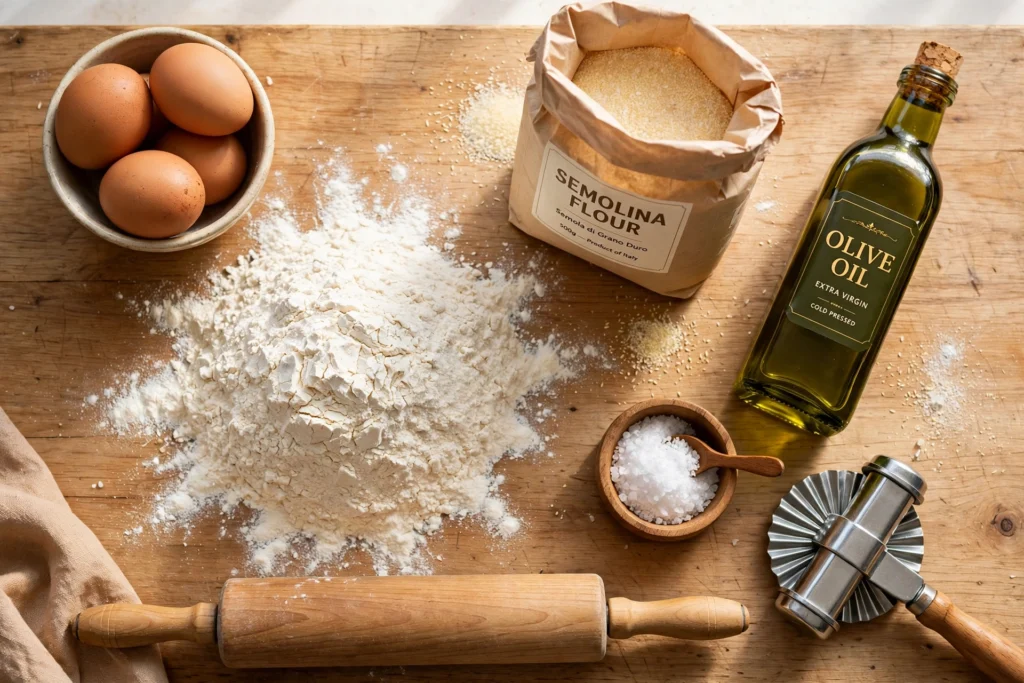
Here’s everything you’ll need for fresh fettuccine serving 4:
- All-purpose flour (2 cups, plus extra for dusting) — shop all-purpose flour on Amazon. Bread flour works too, but all-purpose gives the most tender result for beginners.
- Semolina flour (1/2 cup, for dusting and texture) — shop semolina flour on Amazon. This coarse golden flour keeps the noodles from sticking and adds a lovely bite.
- Large eggs (3, at room temperature) — the richer the yolk, the more golden your pasta. Farm eggs make a real difference here.
- Olive oil (1 tablespoon) — shop extra virgin olive oil on Amazon. Adds pliability to the dough.
- Salt (1/2 teaspoon, plus more for the cooking water) — shop sea salt on Amazon.
- Water (1–2 tablespoons, only if needed) — some doughs come together dry, especially on dry days. Add a teaspoon at a time.
Tools
- Large mixing bowl — shop mixing bowls on Amazon.
- Fork and bench scraper — shop bench scrapers on Amazon for gathering the dough and cleaning the counter.
- Rolling pin (long, straight) — shop rolling pins on Amazon if you’re rolling by hand.
- Pasta maker (hand-crank) — shop pasta makers on Amazon. Not strictly required, but it rolls dough thinner and more evenly than most beginners manage by hand.
- Pasta drying rack — shop pasta drying racks on Amazon to rest the cut noodles. A clean clothes hanger or a floured baking sheet works in a pinch.
- Sharp knife or pizza cutter — shop pizza cutters on Amazon for cutting the noodles by hand.
- Large pot and colander — shop large stock pots on Amazon. Fresh pasta needs plenty of room to move.
Step-by-Step Instructions
Step 1: Make the Dough
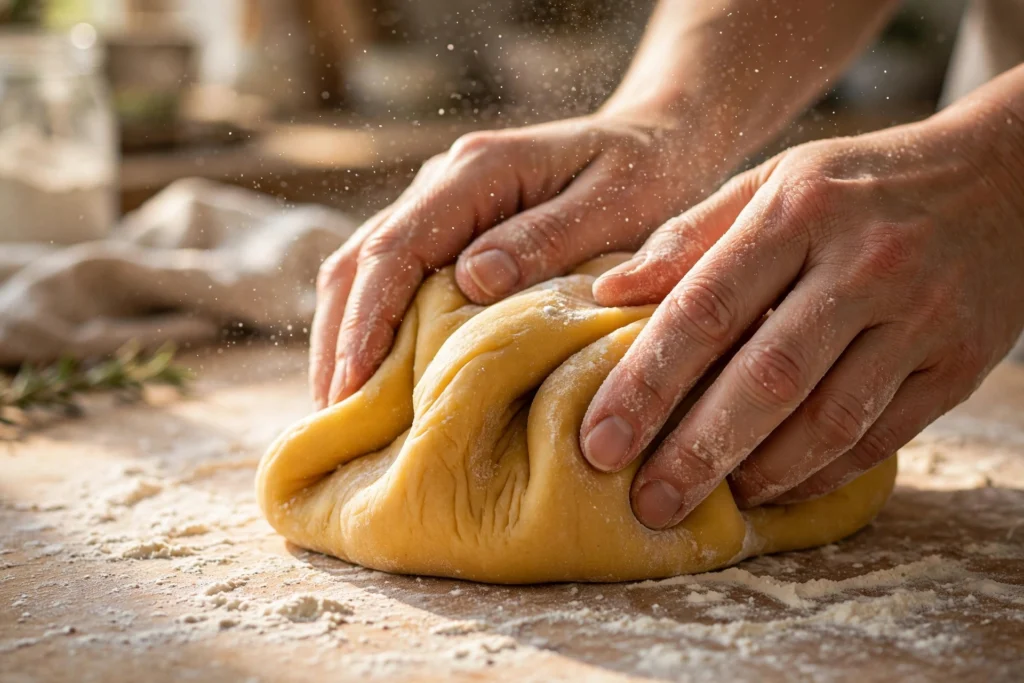
Mound the flour and salt on a clean counter (or in a large bowl, if you prefer less mess) and make a well in the center. Crack the eggs into the well, add the olive oil, and beat the eggs with a fork, gradually pulling flour in from the edges. When it gets too stiff for the fork, switch to your hands and knead the shaggy mass together. If it won’t come together, add water a teaspoon at a time; if it’s sticky, dust with a little more flour.
Step 2: Knead Until Smooth
Knead the dough for 8–10 minutes, pushing it away with the heel of your hand, folding it back, and turning it. It will start rough and end up smooth, elastic, and slightly tacky — like soft play dough. Flatten it into a disc, wrap it tightly in plastic wrap, and let it rest at room temperature for at least 30 minutes. This rest relaxes the gluten and makes rolling much easier — don’t skip it.
Tip: If the dough tears when you stretch it, it needs more kneading or more rest. A well-rested dough stretches like a rubber band instead of snapping.
Step 3: Roll It Out
Divide the dough into 4 pieces, keeping the pieces you’re not working with wrapped so they don’t dry out. Flatten one piece with your hand, dust it lightly with semolina, and run it through the pasta maker on its widest setting. Fold it in half, run it through again, and repeat 2–3 times. Then work down through the settings, one notch at a time, until the sheet is thin enough to see your hand through it (usually setting 5 or 6). Rolling by hand? Roll the dough as thin as you can — about 1/16 inch — turning and flouring it often so it doesn’t stick.
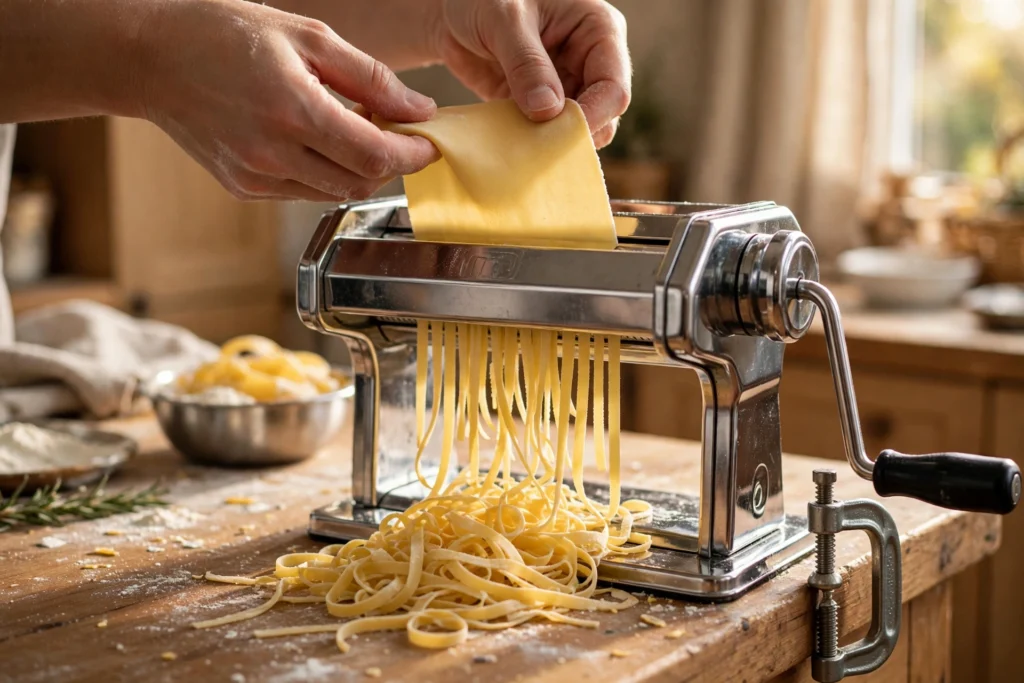
Tip: Dust with semolina, not flour, between passes. Flour gets absorbed and makes the dough tough; semolina sits on the surface and keeps things sliding.
Step 4: Cut the Noodles
For fettuccine, run the sheet through the wide cutter attachment, or lay it flat, dust it with semolina, roll it up loosely like a jelly roll, and slice it into 1/4-inch ribbons with a sharp knife. Unroll the ribbons immediately and toss them lightly with semolina. Drape them over a drying rack or spread them on a floured baking sheet while you cut the rest. Let them rest for 15–30 minutes — slightly dried noodles hold their shape better in the pot.
Step 5: Cook and Sauce
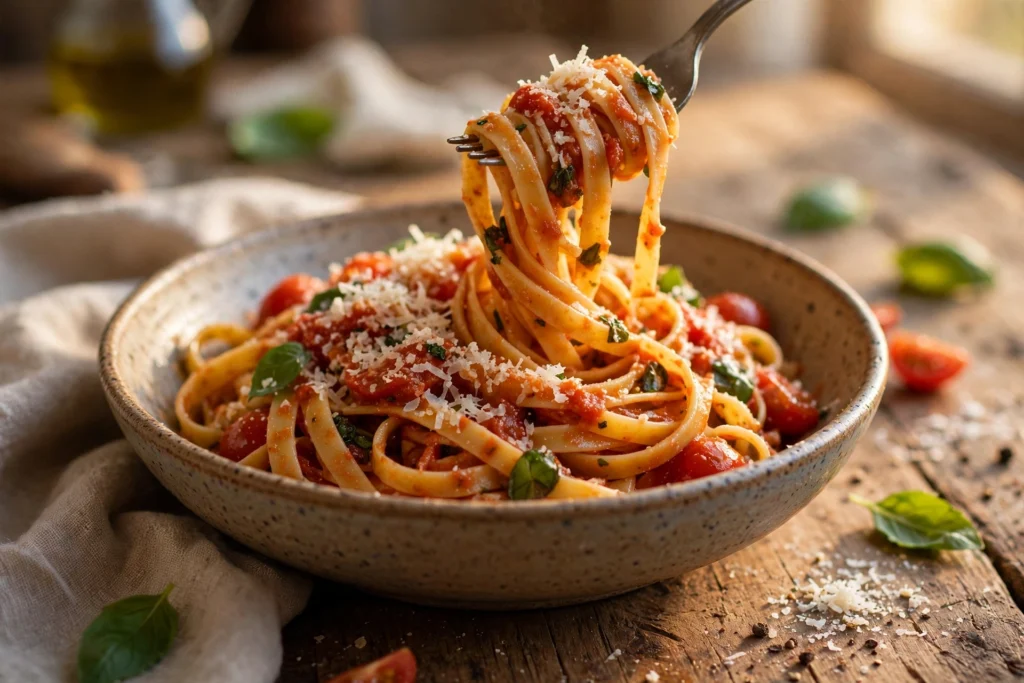
Bring a large pot of well-salted water to a rolling boil (it should taste like the sea). Drop the pasta in, stir gently, and cook for just 2–3 minutes — fresh pasta cooks fast, so taste early. Reserve a cup of pasta water, then drain. Toss the noodles straight into your sauce with a splash of the starchy pasta water, which helps the sauce cling. A simple butter-and-Parmesan toss, a quick tomato basil sauce, or a garlic olive oil sauce all let fresh pasta shine.
Tips for Success
- Rest the dough. Thirty minutes minimum; an hour is even better. Rested dough rolls thinner with less fighting.
- Work in small batches. One quarter of the dough at a time is much easier to handle than the whole ball, especially with a hand-crank machine.
- Don’t over-flour. A light dusting of semolina is all you need. Too much flour makes dry, tough noodles.
- Salt the water generously. This is your only chance to season the pasta itself — unsalted water makes bland noodles no matter how good the sauce is.
- Don’t rinse fresh pasta. The starch on the surface is what helps sauce stick. Drain it and go straight into the sauce.
- Dry extras for later. Lay leftover noodles on a rack until completely dry (a few hours), then store in an airtight container for up to a month. Dried homemade pasta cooks in 4–5 minutes.
Sauce Ideas
Fresh fettuccine pairs beautifully with simple sauces — the pasta is the star, so keep it light:
- Brown butter and sage: Melt butter until nutty and golden, add fresh sage leaves, toss with pasta and Parmesan.
- Simple tomato basil: Warm crushed tomatoes with garlic and olive oil, finish with torn basil and a splash of pasta water.
- Cacio e pepe: Toss hot pasta with grated Pecorino Romano, cracked black pepper, and pasta water until creamy.
- Garlic and olive oil: Gently cook sliced garlic in olive oil, add a pinch of chili flakes, toss with pasta and parsley.
Frequently Asked Questions
Do I need a pasta maker to make fresh pasta?
No — a rolling pin and a sharp knife work fine, and that’s how pasta was made for centuries. A hand-crank maker just makes rolling thinner and more even, and it speeds up the cutting. If you fall in love with fresh pasta, it’s the first upgrade worth buying.
Why is my dough so dry and crumbly?
Eggs vary in size, and flour absorbs moisture differently depending on humidity. Add water a teaspoon at a time and keep kneading — the dough should come together into a smooth ball. Very dry dough can also mean it needs more kneading before you judge it.
Why is my dough sticky?
Usually a little too much water or very large eggs. Dust the counter and the dough lightly with flour and keep kneading; it should smooth out. If it’s still sticking after a few minutes, knead in a tablespoon of flour at a time.
Why did my noodles stick together?
They were probably under-dusted or piled up while still damp. Toss cut noodles generously with semolina, spread them out on a rack or floured sheet, and give them 15–30 minutes to dry before cooking.
How long does fresh pasta take to cook?
Just 2–3 minutes in boiling salted water for fettuccine. Start tasting at 2 minutes — fresh pasta goes from perfect to mushy fast, so don’t walk away.
Can I make pasta dough ahead of time?
Yes. Wrapped tightly, the dough keeps in the fridge for up to 2 days — let it come to room temperature for 30 minutes before rolling. You can also freeze the dough for up to a month; thaw overnight in the fridge.
Shop This Build
Everything for this project in one place — click any item to find it on Amazon:
Ingredients
Tools
- Large mixing bowl
- Bench scraper
- Rolling pin
- Hand-crank pasta maker
- Pasta drying rack
- Pizza cutter
- Large stock pot
As an Amazon Associate I earn from qualifying purchases.
Happy making! If you try this fresh pasta, I’d love to hear how it turned out — drop a comment below.
Leave a Reply